Alvear24 wrote:Again, you've missed the point. Of course etymologies can be diverse, and every European proper name will have seen some variation over the years. But the key here is Llandaff is a widely recognised standard spelling, especially within local communities. The objection is to the process of renaming. So in this case, my knowledge of etymological Welsh obscurities is neither here nor there.....you really need to answer the question that Zach posed in the first place. Why was it necessary / was it a waste of time / was it brought about by an overbearing sense of Welsh PC. To be able to close this debate, you really need to address that question, not the one you think you heard, or would like to respond to.
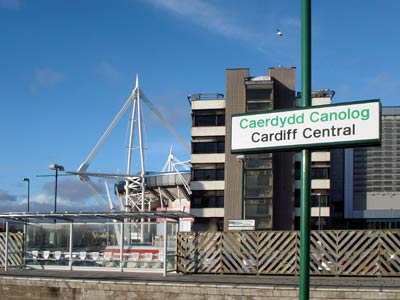
Zach refers specifically to the railway station and as I explained above, I don't know.
There are countless, and mostly pointless ways of spelling places in Wales
Cricieth/Criccieth
Merthyr Tudful/Tydfil
Caerffili/Caerphilly
Unless a place name has two different names that have developed separately such as Swansea/Abertawe or Ynys Môn/Anglesey my personal opinion is that it should almost always revert to the original place name for consistency. Niwbwrch would then become Newborough and Biwmares would become Beaumaris, so it's not always a case of the anglicised version reverting to the Welsh.
For me, it's Llandaf, because the name of the river is the Taf. When the English printing press came to Wales, it used an English typeset, and as K and V were used far more in Welsh than in English, they had to change K to C and V to F and F to FF in Welsh, and so we lost those letters in our alphabet, and so cartographers in the 17th century essentially invented place names using English phonetics. Aberdovey for Aberdyfi and Llandovery for Llanymddyfri etc.
Anyone who says or spells it Llandaff is not wrong, but I would never say 'Landaff' verbally as I'm not a native English speaker.